Showing posts with label writing. Show all posts

Oct 13, 2013

I'm taking a day off of revisions (All That Glows sequel!), so instead of cleaning my house I've decided to slink back to this blog with a life update.

Where have you been the past one and a half months, Ryan? What have you been doing all this time when you could have been typing letters into the white blog box?

Good questions, interwebs. Good questions.

Writing wise I've been juggling projects (which is hardly new, I might add). THE WALLED CITY has been sent off to copyedits, I added about 15,000 words to sekrit novel (with the help of one of the best pumpkin spice lattes I've ever had*), and dove into revisions for my second Faery novel.


I can smell autumn from here...

As for the rest of the non-writing time:


The husband and I photographed an engagement shoot with a couple who pilots Black Hawks! Ridiculously cool!


 After five years of eating on the couch, we bought a dining room table!**


I rescued a baby squirrel and named him Rackety Sam. I gave him to another foster mama who does not own a wolf-hybrid who named him Phil.

The other reason I passed Rackety Sam/Phil off to a foster mama is because we went to Turks and Caicos for a scuba diving trip! I'd never been diving before, so I had to get scuba certified while I was down there.

All you see is blue...

Some of the prettiest waters I've ever seen.


Of course, when you're a writer, you never really leave work behind. I had one last round of THE WALLED CITY edits to get through in my temporary office.


The dives themselves were amazing! I saw sea turtles, reef sharks, stingrays. I also got stung by fire coral, which was substantially less awesome. On the flight home we had another unexpected surprise. Our layover in Miami was not two hours long, but twenty-four hours long. We made the best of it by going out for Cuban food:

Seafood Paella
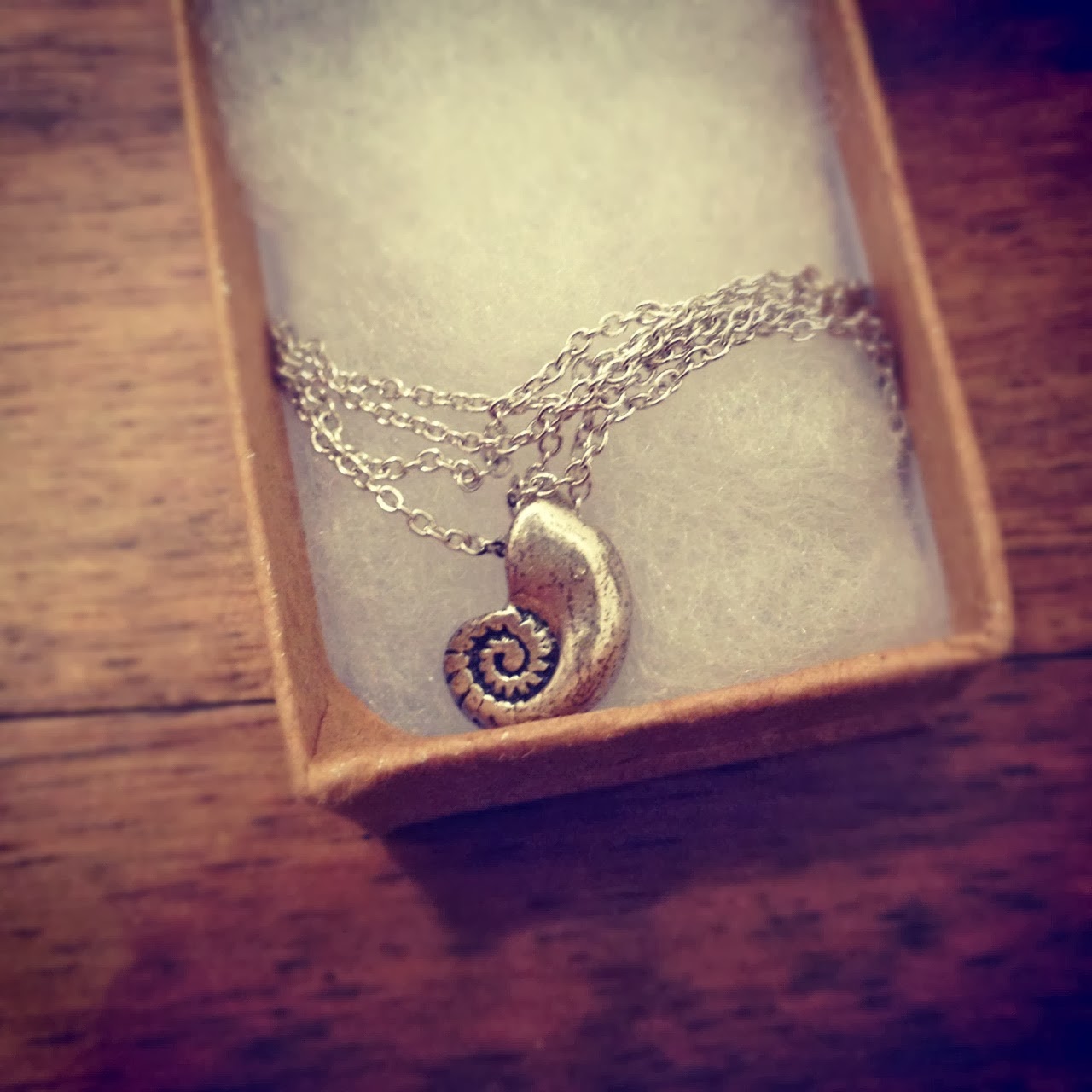
We got home from the trip and I found a package from my editing team at Little, Brown by the door. This beauty was inside:


It's a nautilus necklace! This particular seashell plays an awfully big role in THE WALLED CITY. So this is an incredibly thoughtful gift! I've pretty much been wearing it every day!

And I can tell you up front that these next few months will be just as busy. YALLfest is coming up!!! Yay!

Also! If you want to enter for a chance to win an ALL THAT GLOWS ARC, there's a giveaway going on at Goodreads right now.


*legit. If you're ever in Charleston in the fall, visit the Orange Spot Coffee Shop. They'll hook you up.
** We're real adults now. If you couldn't tell.

Dec 19, 2012

the next big thing

This title sounds a tad pretentious doesn't it? I mean, I really, really hope ALL THAT GLOWS becomes the next big thing. But it's seems a bit heady to predict that. However, this is the name of the blog series that's been going around the interwebs. I've been tagged by the lovely Lisa Ann O'Kane and Matt Sinclair over at The Elephant's Bookshelf Press. So clearly, I had no choice but to bow to peer pressure. :)

1- What is the working title of your book?


The title is no longer working! Hooray! It's been known under several names (among them Godmother and Luminance Hour), but the final title for my debut novel is ALL THAT GLOWS.

2- Where did the idea come from for the book?

The seedling for his novel actually came from a prompt for an anthology submission. The anthology was looking for short stories that portrayed faerys in a "modern, sleek and sexy" way. That prompt got me thinking about the traditional Fairy Godmother and what it would look like for them to guard a modern day, partying prince. I jotted out the short story over a weekend and handed it to my coworker to read. When she finished it, she looked over at me and said, "Ryan, this is a novel. Not a short story." As soon as she said it I knew she was right, so I started writing.

3- What genre does your book fall under?


It's a heavy blend of paranormal romance and fantasy. 

4- Which actors would you choose to play your characters in a movie rendition?


You know, I actually haven't thought about this too much. Can I get back to you?

5- What is the one-sentence synopsis of your book?


When a Faery is forced to guard the prince of England from assassins and paparazzi, she finds herself feeling more than she should for him. 

Or this one, which is more like a run-on sentence: In which a partying prince falls in love with a Kate Middletonesque fae, who has been protecting the British royal family for centuries, and who must make an impossible choice amidst a backdrop of a palace murder and paparazzi mayhem.

6- Will your book be self-published or represented by an agency?


I am blessed and fortunate enough to call HarperTeen my publisher. *pinches skin* *still can't believe it*

7- How long did it take you to write the first draft of your manuscript?


Four months. (March 09 - June 09)

8- What other books would you compare this story to within your genre?


Shiver. Beautiful Creatures. Daughter of Smoke and Bone. 

9- Who or What inspired you to write this book?


A mixture of many things: Traveling to England when I was young. An Encyclopedia on Faeries that my sister-in-law gave me one Christmas. Taking classes on Old English, Tolkien and J.K. Rowling when I was in college. The song "Saelic" by Helium Vola. Reading deliciously written love stories and wanting to craft my own.

10- What else about your book might pique the reader's interest?

For the record, I started writing ALL THAT GLOWS long before Kate and Wills got engaged. But Kate Middleton's popularity didn't hurt in my search for an agent and publisher.

The book is coming out in Winter 2014! So keep an eye out! Or an ear, I'll probably be screaming about it all across the interwebs.

And since this is a blog hop and I'm supposed to tag people, here goes:


Wendy Higgins

Kathryn Rose

Wesley Kapp


Nov 26, 2012

one step forward. two steps back.

The title of this post is what it has felt like trying to get out the rough draft of my current WIP.

I am a word-count ho. This means that I measure a lot of my writing productivity on how many words I type out in a day, a week, a month, etc. Sometimes this is a good thing, because it forces me to write when I would rather slouch across the couch and watch TV. Other times it is bad.

How can writing lots of words be bad? You might ask. Isn't that your job?

Good point. And yes it is. But my job as an author isn't just writing out a bunch of words. It's writing out a bunch of good words that tie together into a cohesive and hopefully emotionally significant story.

Whenever I get too focused on words, I sometimes forget to stop and make sure they're good. I don't take the time I really need to go back and read what I wrote and reflect on where the story needs to go.

When I started out on Book 2 (ALL THAT GLOWS's sequel), I was determined to write straight through. I wouldn't take time to revise or rewrite. I would get the bulk of the writing out of the way and revise later.

This did not happen.

Around page 75 or so I realized that in order for me to figure out the end of the story, I needed to fix up the beginning (ie revise and figure out what the heck is going on). I tried to follow an outline. I really did. But I will always be a pantser (organic plot finder) when it comes down to it.

As of now, I have about 120 pages in my sequel word document. And 40 pages of scenes I've deleted. It's taken me about two months to work up to this point. I got really upset when I compared my speeds to writing the rough draft of ALL THAT GLOWS (which only took me about four months, and I was working full time). But then husband reminded me that I didn't go back and revise. So I'm guessing this only means good things. It's showing my growth as a writer, that I'm going back and finding my story at the very roots and growing it from there. Something I didn't do the first time around with ALL THAT GLOWS. Hopefully this will cut back the amount of revision I have to do post fact.

Hopefully.

But right now I can't worry about that. I can only focus on making my words count. Each and every one of them.


Sep 11, 2012

why novel writing is like giving birth

During the past month I've come to a singular conclusion.

Writing books is like giving birth.

I've written several books. I have never actually birthed a child. But hear me out.

The other day I was moaning and groaning about my current WIP to my tireless, stalwart husband who hears me moan and groan about these things quite often. In one of my more drama-queen moves, I threw my hand over my brow and said, "This book is trying to kill me."

Then, after a wave of deja-vu, I sat up and said, "I'm pretty sure I've said that before."

Lo and behold, I did. Turns out Cutthroat Novel was also trying to kill me. Which is why I nicknamed it Cutthroat Novel in the first place.

It's funny, because even if I try really hard, I can't really remember how terrible and brutal those first few months with Cutthroat were. But according to le blog, they were. While in the midst of the rough draft throat of LUMINANCE HOUR 2, I have come up with a theory. Writers only write second novels (and third and fourth and etc), because they forget what an utter, terrifying, agonizing process writing an entire novel is. Just like women have more than one child because their brain blanks out on how painful the actual labor was.

Why did I choose this profession again?

Just kidding. Just like the mothers always tell me, the end product is more than worth the pain it costs. I just have to keep reminding myself that as I keep sweating away!

Aug 28, 2012

driving through puddles and facing fears

Apparently my city has decided that it wants to try and be a runner-up to Atlantis today, which has made for delightful driving. (note: please read previous sentence with a hint of sarcasm in your voice)

Water + Cars + Myself = not a good portfolio of experiences. I was spooked at the tender age of eighteen. It was a fateful Easter Sunday, when all the heavens broke open and decided to land on the ground all at once. I stalled my Volvo in a puddle that came up to my knees. I then ruined my Easter skirt climbing out of the car into said puddle to push it out. It never ran quite the same again.

Though I am seven years older, I still drive a (different) Volvo. This Volvo also hates the rain, but sometimes I have absolutely no choice but to drive it. Today I had to make a 30 minute trek through streets that literally have people kayaking through them, the entire time I was more than a little tense about stalling out/getting into a puddle that was too deep for my car to handle. My breath would suck in like a vacuum every time I skated through. Heart beating like a taiko drum.

But if I wanted to get home, I had to face my fear.

Fear can be a really powerful thing if you let it. I find that in art, there is always going to be fear. Especially if you're creating something that's of worth. The better the thing you're creating, the higher the fear. Over and over and over again I have to face the fear of: Will this be good enough? Will this pay off? Will this even work? For every book, every draft, every chapter, every sentence, every word.

Fear will always be there. One of my favorite and generalized quotes is, "Courage is not the absence of fear but the will to rise above it." (Or something like that). You can't really make fear go away. But you can ignore it. You can choose to act anyway. You can drive your car through that puddle. You can take your manuscript in that direction. And you probably should, because if you don't, you'll be stranded and the fear wins.

So I faced my fear and drove.

I got home.

It's also of notable mention that the house I'm currently inhabiting is backed up to an old rice field/marsh, which means that the entire back yard is now a small sea:


I've been keeping an eye out for alligators.

Aug 20, 2012

it's a hard-knock life.

I'm about sixty pages into LH2 as we speak. Which means I'm doing a lot of this:


Tough life.

Meanwhile, you know you're on the right track with a rough draft when you finish a scene, reread it, and then realize, "Oh dear God, this is a mess." It's easy to forget how messy and all over the place rough drafts are. They're pretty much the equivalent of a puppy who had not been house-trained and just drank a gallon of water and is dancing all over your imported Turkish rugs. Endearing, but a lot of work. Especially when your end goal is to make it a top-rated show dog.

Okay, off to clean some metaphorical pee from my manuscript. Or cyber-stalk Kate Middleton. Both count as work, right?

Jul 23, 2012

on the verge of book 2

As I write this I'm standing on the edge, gazing down into the deep, plunging abyss.

The edge, of course, is LUMINANCE HOUR 2 and the deep, plunging abyss are all the words I haven't written yet!

That's... a long way down.

These cliffs aren't foreign to me. I've stood on them many times before, when the stories I dreamed up were no more that images swirling inside my head, waiting to be planted to the page, word by laborious word. I've jumped and let the fragments of words piece themselves into sentences, scenes and stories. It's a really cool thing to see, to realize the world that sprang to life from inside your head.

But sequels... Sequels are strange beasts. You have to take the plot and character arcs you tied up in a neat little bow in book one and unravel them all over again. You have to push your characters and your story further without being gimmicky or predictable. You have to challenge your world-building, your writing, your plot twists and take them to the next level. Add all this with the pressure of writing under contract (with deadlines and editors and fans all piercing you with invisible stares) and you have yourself a book 2 writing scenario.

I'm scaring myself just writing about it!

Apparently I'm not alone in the fear of starting a sequel. A lot of the Luckies (YA and MG authors debuting in 2013) have blogged about this very issue: the paralysis of the blank page. Erin Bowman, author of TAKEN, wrote a great post here about why starting a new novel is terrifying. Ever. Single. Time. It doesn't matter if you've written one book or twenty. Every new project has it's own new string of challenges.

So I'll stand at the edge of this sequel cliff and say, "Okay, Book 2! Bring it on!"

Jul 9, 2012

intuition: the difference between flexibility and roadkill

My new writing goal: revamp Cutthroat novel by the end of the summer. I've had all my wonderful betas and critiquers get back to me with feed back, and after compiling all their comments and adding some of my own, I have 463 comments to address while whipping it into "letting my agent see it shape."

Ack.

I think though, that I'm getting to a better point when it comes to mentally handling critiques and revisions. To create anything worthwhile you have to be flexible, willing to listen to others and willing to change things that need to be fixed.

There is however, a fine line between being flexible and being roadkill. I probably won't take every single suggestion that my betas give me. And I shouldn't, because different people will often have vastly different opinions when it comes to a character or a plot line. It's up to me to figure out which comments will make my piece stronger, etc.

And sometimes that job is hard enough to make my head hurt. I can't always describe how I determine this. Mostly it's a matter of intuition. Of feeling in my core whether or not it's something that will make my story shine true.

Anyway, this is me rambling. Here. Listen to a song by the Yeah, Yeah, Yeahs that I'm currently obsessing over:


May 30, 2012

my rough drafting process.

I'm closing in on this rough draft. The end is nigh! I can almost smell it. Which means I'm pretty manic.

All of my rough drafts I aim for a 80,000 word count (give or take a few thousand) (usually give!). Right now I'm about at 63,000 words.

Rough drafting is my favorite out of all the stages of the novel's growth, which can be unfortunate, since it ends up only being a little blip in the project's life-span (at least, this has been my experience with LUMINANCE HOUR). While you're in the throes of it though, rough drafting feels like it lasts forever. Especially when you take a wrong turn. Or decide to rewrite the first third of the book.

The thing I love most about rough drafting is the absolute freedom. When you first begin you aren't married to anything. You have no plot. No subplots. No deep character backstories. (At least, I don't, because I'm not really a plotter. At all). I think the real joy for me is seeing these things bloom to life on the page in front of me. To sit back and see how my subconscious manages to piece it all together in a way I don't always completely understand. (That subconscious is a sneaky, smart thing.)


Usually I start a story off with a single key scene in mind. It doesn't have to be in the beginning of the story. In fact, it usually isn't. For LUMINANCE HOUR, that scene is in Chapter 2. For Cutthroat Novel, the scene doesn't pop up until about page 80. Sometimes it's the first scene I write. Sometimes I back track and make notes and imagine this world for hours before I actually start to write.


0 words: Brainstorming. Who are these characters in my head? How do they connect to each other? Where do they live? Why? Is this our world or a different place entirely?


0-5000 words: Tentative exploring phase. Where I get a feel for the world and my main characters. Sometime it stays. Sometimes it doesn't. Even if I delete it I usually file it away for back story. Here is where I establish who is narrating and why. Sometimes there's more than one.


5001-10,000 words: Minor characters are popping up. They have stories too? How am I supposed to keep this straight? 


Reread the 40 pages. It's not bad, though the exploratory nature of rough drafting means it's, well, rough. At this point I usually go back and fix things, align facts. Polish up some language issues.


10,001-20,000 words: There should be a conflict in here somewhere. Oh. There it is. This is SUCH AN AWESOME STORY. I can't believe no one has ever thought of this before!

This is also the phase where I ship off a very messy Word Doc to my critique partners. I then stare at my inbox and wait for their immediate response (just kidding!) (not really...)


20,001-30,000 words: "The roller-coaster phase." Where, one day, you feel like your prose is golden and your character inscrutable. The next day you want to chuck your laptop out of the window because you can't think of creative dialogue tags.

Which is when your critique partners write back with rosy reviews (with a few peppered criticisms dashed in). This is generally a wonderful moral booster and keeps me from throwing away the draft altogether.

30,001-40,000 words: Really? This is the halfway point? I feel like the ball has just started rolling... *it was at this point in Cutthroat Novel that I realized my story was missing a narrator. So I had to backtrack and add him in. Which bumped the wordcount up considerably.

40,001-50,000 words: Oh. The plot is picking up. There goes the ball. Wait. I can't see it anymore!!! *runs frantically after plot*

I usually take another break at this point and reread to make sure my character arcs and subplots are coming along as planned. I make notes in a separate Word Doc to return to when I get to tackle edits. (Another joy of rough drafting: There's a problem? Leave it for edits! Future-self won't mind at all!)

50,001-80,000ish words: No looking back now! It's like the Splash Mountain ride at Disneyworld--once you get out on that ledge, there's no stopping it. The last 30k usually goes fast for me. It's a very manic stage, where I see all of the many character histories and subplots I cast come together and push the plot to its final solution.

WHEEEEEEE!


And then? I close the Word document, pour myself a nice glass of wine and let it sit for a month without touching it. (The marination creates good distance). I'll send it to betas, CPs and my agent and take a well-deserved break.

To a non-writer, I know this process probably sounds a bit... unhinged. And it can be at times. Writers- does your rough-drafting process look at all similar? I'm curious!

May 29, 2012

herd mentality

One of the sad, sad truths about living close to a beach is that you almost never go. It's been warm/borderline beastly hot for a few months now, but I've only made that 15 minute drive to the beach about twice. And neither of those to actually swim in the ocean. I know, I know, I can hear your yells of admonishment through my computer screen. I plead the busyness of real life?

So I decided to go last weekend. Hindsight is 20/20... but I really should have realized that it was Memorial Day Weekend, thus, every other person in the city/county/state had the same idea. I put on my sunglasses, sprayed on my sunscreen and sat in my car for an hour and a half. When I finally reached said beach, there was very little wiggle room on the sand. But I was able to lounge and reread The Scorpio Races for  a good three hours to make my traffic snarl worthwhile.

I suppose, though I wasn't completely aware of it at the time, that I was participating in a "herd mentality." My friends/acquaintances/everyone on Twitter/Facebook talked about going to the beach, so I decided to join. And I "suffered" because of it (in a very, light, metaphorical, white-whine sense). It made me think of how many times writers fall victim to the herd mentality.

Herd mentality isn't always bad. Often it starts off as a good thing. People will flock to entertaining ideas/plots/genres. There's so much out there to be discovered, that oftentimes we need other people to experience things first and then recommend them. This is why sites like Pinterest are so wonderful.

I think where it goes wrong, is when writers are afraid/insecure in their stories because they don't fit in with the hot trend of the time. Some are even so worried about where the herd of other writer/agents/editors/reads is going that they don't write down the story that's burning inside of them. Instead they write what they think the herd will want to read. They cater to the tastes of others instead of penning down the story they were meant to write.

Sometimes the stories of your heart and the "hot genre" coincide (lucky you!!), and that's great. But most of the time they won't. And to me, the stories that I love the most, the books that stand out, are the ones where the author took risks.

Harry Potter was written at a time when children's literature wasn't "popular."

The Lord of the Rings is one of the first volumes of modern "high fantasy."


Redwall features talking animals who live in a woodland Abbey....

Killer water horses? Reincarnated chimera/human/demons?

This is as much as a peptalk for myself as it is for anyone reading this post. Don't worry about what other people will think. Write down what you need to write. This is how the best stories are born. And if the herd loves it, then great. And if they don't. Well, at least you had the courage to jump and write what you needed to.

Write what you love. Who knows. It might spearhead the next big trend!

May 23, 2012

full time! (at least for now)

Remember when I tried to do that whole 2k-a-day challenge thing? How I got through it and decided that  pushing myself so far kills that little thing called creativity (which is a pretty necessary qualification for this job). Since Monday I've found myself in the amazing and fortuitous position of being a FULL-TIME-WRITER!
Throw Confetti
Commence Confetti!!


It's only temporary, since, unfortunately, bills do not stop coming but book advances do. However, I fully intend to take advantage of these next two months. In the past three days I've discovered some things. Mornings at the preschool were by no means utterly exhausting, but they did take a mental toll that adds up to about 1000 extra words for me! I've written just about 6000 words since the beginning of Monday morning! Which is really good for me. Let's hope this is a steady trend and not just an outlying spike in creativity.

I've spent the past few weeks immersed in the world of Cutthroat Novel, which is coming along quite nicely. I hit the 50k mark today, and according to Maggie Stiefvater's post 80,000 Words of Fun, Fun, Fun this is the point in the draft where the story feels neverending. I'd have to agree. I only have 30k words to wrap up THIS ENTIRE PLOT? AAAAGH!

Anyway, I can't really say much about Cutthroat Novel, except that it's vastly different from other stuff I've written. But I can show you a few pictures that have helped me form this world on my Pinterest board for Cutthroat Novel.


Apr 26, 2012

going organic (plot-wise)

In the writing world, we have terms that define the way a writer plots things. For example.

Outliner (n): a writer who keeps detailed notes and synopsis of their projects. They rarely deviate from their roadmapped plots. One such writer is J.K. Rowling, who apparently had all 7 books of Harry Potter outlined before she started writing the first one.

Pantser (n): a writer who "flies by the seat of their pants" plotwise. They write as the words take them and do not make outlines or keep notes.

A writer who does a bit of both is known as a "pantyliner" (hehe.)

I'm a natural Pantser. I've tried outlining, believe me. But then my manuscript automatically rebels and says, "Hey, guess what, I'm going this way now. Have fun rewriting your outline, sucker!" People often ask me if I know what will happen story-wise when I start writing a book. The answer is: kind of. I usually have a vague (and sometimes not vague) idea of where the story will go. But this always manages to change as soon as I actually put pen to paper (or fingers to keyboard as it were). And I have yet to know what the ending will be for any first draft I start.

But, honestly, Pantsing a novel is scary. There are so many possible ways a plot could go that you can often take wrong turns and go a ways down a false trail. I've grown to find that these false trails are necessary to the development of my novel. Sometimes I have to write useless scenes or silly side-plots to get to the heart of the novel. And while this means I have to throw away thousands of words, they weren't written in vain. Every sentence gets me closer to the end goal of a great and hopefully functioning first draft.

Every one of my books starts off with a seed of an idea. Some tiny wisp: a picture or a first line that sticks in my head and won't leave until I write it down.

When I do write it down, more comes. The seed starting poking out feeler roots: the character, their voice, the setting. What happens next. And what happens after that.

The first few scenes are always rough and exploratory. They almost never end up in the final draft (and if they do, they look very different!). These feeler scenes help me realize who the character is and what their story is (both past and future). Usually in these scenes there will be sentences or instances that will automatically compel me into the "what next." And I go from there.

The what next scenes break out of the ground and pile together on top of each other, growing and growing until the core of the story appears. Sometimes it takes a good deal of time for this core to appear. Such as with Cutthroat Novel. What I thought was the core conflict was actually.... not. Well, not fully.  And I just realized this when I decided to add more vantage points.

But for me, writing organically doesn't mean going completely wild. Just like a tree, novels need to be pruned and cared for in order to grow well. Those wonky side-plots can be hemmed and trimmed to provide good tension and rich subtext. Characters who were hidden in the woodwork can be coaxed out and formed into intense, beautiful voices.

So, I guess I'm more of a "Pantsing with care" kind of writer.

What about you guys? Are you outliners or pantsers?

Apr 11, 2012

why i failed the 2k a day

As my faithful readers know, about a week ago I decided to throw myself into a 2k-a-day wordcount challenge.

I failed.

Here's why. It's not that I can't write 2000 words a day. I can. I proved this to myself quickly. I put my nose to the grindstone and dutifully provided the number of words I needed to satisfy this goal. But I noticed, after a few days of this, that my writing was getting out of control.

The best way to explain this feeling would be to use a skiing metaphor. I love skiing, I'll even go down black diamonds if my husband coaxes me with promises of hot chocolate (and this is saying much since I had a rather serious skiing accident on one during my high-school years). I love going fast and hearing the shred of ice and snow under my blades. But there's nothing I hate more than going fast and feeling out of control. You know what I'm talking about, like any bump or hitch will send you flying into a cloud of powder and disjointed skis.

Well, writing 2k a day had a very similar feeling. I didn't feel in control of my story. Instead the demand for word-count was dragging me around by the hair, forcing me to write shoddy descriptions and words just for the sake of themselves. I didn't have time to mull over my characters of where the story was going, which meant that I took it down the wrong path more than once.

It was good for me to do this experiment, because it taught me a lot about my writing process. I'm a slow writer. I need time and space and freedom to delve into the story between the words and discover what I'm trying to say.

So today, I'm going to go back to the 6000 words I wrote and carve them down and figure out what this story needs in order to make it shine.

Maggie Stiefvater also has something to say about this, after she tried to write The Scorpio Races as a Nanowrimo novel in 2009. Somehow, hearing an author as talented as her coming to the same conclusions gives me hope. :)

Apr 6, 2012

the 2k a day challenge.

Lately, I've been doing so much juggling that I feel like a clown. It is my own fault. Because I seem to have a big problem making myself not write. And it is the nature of the publishing beast that there are long gaps of waiting/nothingness between editorial letters/other publishing tasks.

I currently have 3 WIPs in various stages of the writing process. It's kind of like a Netflix queue--listed with priority and importance.

1. LUMINANCE HOUR (obviously)
2. Southern Gothic Novel
3. Cutthroat Novel

Anyway. I've found myself with about a 2-3 week window to work on Cutthroat novel (since the other two are currently in the hands of professionals.) Cutthroat novel is in the first/rough drafting stages of the process. This is my very favorite of all the stages, and I'm really enjoying the chance to go back to drafting after 4 months of revision work.

But soon I will have to drop it and go back to revision land, so my goal is to get as much of this rough draft knocked out as possible. I have what I would like to diagnose as a "writing wall." This happens at about the 1500 word mark (ie. 6 double spaced pages). Once I hit this I lose my fuel or whatever it is that makes the writing magic happen. I lose hope. I go clean the house / read / eat / do other things.

I am determined to defeat this writing wall. And so it is my goal, for the next few weeks, to write 2000 words a day. It will be a stretch, and I might hate myself for it, but I will try to make this happen. If I do not, feel free to harass me. (Though keep in mind I take weekends off!)

And hey, if you guys feel like you can do this too, feel free to post your word sprints in the comments below!

Day 1: 2010 words

Day 2: 2033 words (draft total at 39,000 words)

UPDATE: After reading through these scenes I've decided to tuck away (see scrap) the last 1000 words of Day 2. This is because it was heading on a false trail. Alas. I will still count the words as written though. Because I wrote them.

Mar 30, 2012

why the second book is harder than the first

First of all, I must clarify that the "second book" in this subject heading does not refer to LUMINANCE HOUR 2, but to SouthernGothicNovel, which has given me much angst and cause for whining.

You would think that, like most learned skills (such as driving, riding a bike, reading...), writing books would get easier the more you do it. Like so:


Book 1 = daunted, confused, whiplashed, emotionally unstable author.
Book 2 = less daunted, a bit confused but mostly knows what they're doing author.
Book 3 = this is easy, peasy and better than German chocolate cake author!

This graph makes sense. Unfortunately, it does not reflect reality.

Reality looks more like this (for ALL THE BOOKS):


This is me, being tossed back and forth by writerly PMSage, thinking doom and generally black thoughts as to the future of this manuscript. And behind, in the distance, are my characters. Laughing. The one on the right is not fat. She's in a hoop skirt. (It's true).

The second manuscript sometimes feels like an ultimately evil practical joke. Secondary characters come across flat. Subplots get lost. Backstories become a load instead of the treasure trove of character depth I imagined they would be. I stare at my manuscript and wonder why, why it isn't working. And then I start wondering. Maybe my first book was a fluke. Maybe I really can't write and I somehow managed to deceive both my agent and my editor and the entire publishing company into thinking that I could.

However, discussions with many other debut writers in the Lucky 13s has helped me realize that these feelings of struggle, doom and suckage aren't signs of a poseur. They're normal. Every writer (or almost every writer) goes through this same process of struggling with book 2. And 3. And 4. And 5. Etc.

One super observant Lucky 13 brought up a very, very excellent point. One of the reasons writers get so frustrated with manuscript number 2 is because they expect a very unrealistic perfection. For months and months we've been working with highly polished manuscripts, giving them their final shine before they head off into the wide world. We've worked with these shiny projects for so long that we forget what they used to look like, the gnarled, warty first drafts they once were! So when we transition from flawless final draft to decrepit first/second/third draft, we start to lose heart. We forget that it will get better.

I think, because of this, the second book is actually harder than the first, because as writers we feel like we have to "live up" to these incredibly unrealistic expectations of producing a perfect first draft that's as good, if not better than our debut novel. And that, my friends, will never, ever happen.

So yeah, I'm working on giving myself grace with this manuscript. I can already see how it has such potential to shine. I just have to be patient and coax that out!

Mar 22, 2012

fending off the SNIS (shiny new idea syndrome)

As I have written many a time before, perseverance is the key to becoming a published writer. This rule also continues to apply after you have "made it" and gotten a publishing contract.

Right now I'm bushwhacking my way through the second draft of my SouthernGothicNovel. Yes. Bushwhacking. With proverbial machete and all. I'm hacking away scenes. Splintering them beyond repair (at least, right now it seems that way). Bushwhack revising is depressing and discouraging. Bushwhack revising sometimes makes me want to cry. (True confession).

And it is exactly times like this, that the SNIS starts tracking me. Ready to pounce and take me away at a moments notice.

SNIS. Shiny New Idea Syndrome.

So I'm standing, staring at this absolute mess of my novel in progress, thinking of all the laborious sweat filled agonizing hours it will take to make it reparable. And a shiny new idea sidles up to me.

Me: Oh, hello.

SNI: Look! I'm so neat! And new! And exciting! I have an amazing plot and flawless characters and awesome settings! Write me! Write me!

Me: You do look nice.

SNI: No one will know if you write a page or two. Come on. Leave this work for later, explore my worlds!

Oh, readers. This is so temping. The siren song of the shiny new idea.

There is a problem though.

You see, I have a queue of WIPs. The second round of edits of LUMINANCE HOUR, the revising of SouthernGothicNovel, the completion of CutthroatNovel, and the second book of LUMINANCE HOUR which has yet to be born. Adding one more would be insanity.

So, I did what any self-respecting author might do. I wrote the first two pages of SNI and a synopsis. I'm really excited about it. It's a good idea. A good one. But, I took those 2 pages and synopsis, saved them into a file, and buried them, deep deep deep into my computer.

It could take years before I make it to SNI (which I suppose then will be a SOI, shiny old idea). But at least it will be there. Waiting.

For now I have to keep bushwhacking.

Mar 15, 2012

who we are

This blog entry may be a-- er-- rawer one that most. Probably because I've had the opportunity to do a bit of introspection this week.

One of the biggest temptations for me, as a writer, is to put my identity into my writing. It's so easy to step back, look at everything I've written and created, and tell myself that those works are me. That my success as a person, as a human being, is directly linked to my writing.

This is bad.

It's not bad to take pride in your work. I'm not saying that. But it is a problem to let your work (and the success or non-success of that) define who you are. Because when this happens, you are putting yourself in danger. Nothing on this earth is certain. This includes the publishing world. It's pretty much a guarantee that not everything is going to go your way. You could get awful reviews, a not-so-great cover or not sell enough copies to meet your advance. Hopefully none of these things will happen, but there's no guarantee.

The world is a very subjective place. And if you put your self-worth in something so vulnerable, then you will inevitably receive some very bad blows to your ego (and then have terrible emotional whiplash as a result and binge on chocolate and bad TV).

Yes, I am a writer, but that's not all I am.

I am a Christ-follower, a wife, a daughter, a sister, a teacher, a friend, a traveler and so many more things. And this wider scope will only serve to make my work that much better.

What about you guys? Do you sometimes have trouble separating yourself from the success (or lack thereof) of your writing?

Mar 7, 2012

writer's block

As you might have read below, yesterday was a very frustrating writerly writing day. Why? Because I had writer's block.

Which incidentally makes me feel like an angry wet cat.

Writer's block is so frustrating simply because it's something that I really cannot control. It's not like I wake up one day and decide Today would be a great day to get writer's block. It just happens. There's a point where I cannot go on with a scene or if I can it just feels wrong. I've learned (especially over the past few months with revisions for LUMINANCE HOUR) that my intuitions are usually right when it comes to what will work and what won't.

But yesterday, I couldn't figure out for the life of me why the scene felt so wrong. I spent about half an hour just staring at my computer screen with an agonized stare. Scribbling nonsensical things in my notebook.


In case you're wondering about the robot reference, it's in connection with Laini Taylor's writing blog.

Anyway. I ended up setting everything aside and picking up a book (Jessica Spotswood's Born Wicked if you were wondering). Usually reading helps clear my head. But when I put the book down I was still feeling... stuck.

So I decided to talk about it. This is just one of the many reasons why critique partners are SO NECESSARY! They help you remember that you don't suck as a writer and that your slump is only a temporary natural thing. And sometimes they can even help you figure out what's wrong and how to fix it!

In my case, I was trying to cram too much into such a short span of pages. I realized what I needed to do to get me out of my rut and make my manuscript better for it. Of course, doing said thing means "killing my darlings" (ie. deleting or filing away some scenes that I LOVE because the writing is SO PRETTY) (<--as you can see I'm being so humble here.). And this subject belongs to another post entirely. I'll let you know how it goes.

So, in summation, to get over writer's block one must:

A) Curse and write about robots in sloppy handwriting.
B) Stare at computer screen for a lengthy amount of time.
C) Read a book.
D) Talk it out with you therapist (er, critique partner...)
E) All of the above.

I will let you decide.

Oct 26, 2011

setting as a character


Today, in my writerly writing post, I’m going to address something that I’ve come to realize over the course of my past two manuscripts. Place is important. Where your story is set is an incredibly significant detail.
You see, place is more than just a place. Place is a character. Where you set your novel can affect the mood, the language and the tone. It can make your novel distinct and set it apart. My agent says in her “what I’m looking for” list that she loves “settings tilled with strong regional flavors.” I would say that I have to agree with her. I’m much more drawn to a story that has a unique and well-described setting. So many novels take place in high schools and small towns—it’s the ones set in unique places that I’m most likely to remember. Katie Crouch and the dynamic duo Kami Garcia and Margaret Stohl do a wonderful job of bringing the South to life in their novels. Though their characters go to school like every other American teenager, their experiences and stories are tinged with the flavor of the South (“Hey, y’all!”).
I think one of the reasons that place has become such an important aspect of my writing is because of my love for traveling. I know that not everyone gets the opportunity to fly around the world and experience different cultures and landscapes. I’ve been very blessed with the opportunities and resources to see a lot of foreign countries, eat all kinds of crazy foods (nevermind that I’ve had food poisoning thrice. We don’t speak of that…) and meet tons of amazing people. When I was twenty-two I was determined to drag my husband along with me on a three-week Eurotrip (Believe it or not he didn’t want to go. He thought Europe was just art galleries.). My father-in-law said something to this effect: “You’re going for writing research aren’t you.” This comment took my by surprise. I wasn’t going for writing research. I was going to eat. But the more I thought about it, the more I decided to shove away the experiences in my mind. I didn’t intend to write a book based on my experiences in Europe. But it was only because I’d been to Europe that I was brave enough to write a book based in London. When I moved to South Korea people asked me if I was going to write a book about my experiences there. I told them the truth: probably not. Will my experiences in South Korea show up in my writing? Undoubtedly. I don’t know when, or how, but I can almost guarantee that it will.
What are some places that you absolutely love? What are places that inspire you? For me, it’s impossible to count all such places on a single hand. I’ve already centered projects around two of them: London and Charleston. There are so many more countries and cities that I want to feature in my writing. I don’t know if I’ll have the time or the space to fit them all! This being said, I think it would be cool to do a mini blog series on different places I’ve been and how they inspire me. I’ll get on that.
So my challenge to those of you who are writers is this—treat your setting like a character. Give it depth and detail. Let it become an inseparable part of your story. Don’t be afraid to commit to a place, even if you’ve never lived there or spent a huge amount of time in it.
Readers—what are some books that you love because of where they’re set? Do you have any?